Alan Llavore | Office of Marketing and Communications | (909) 537-5007 | allavore@csusb.edu
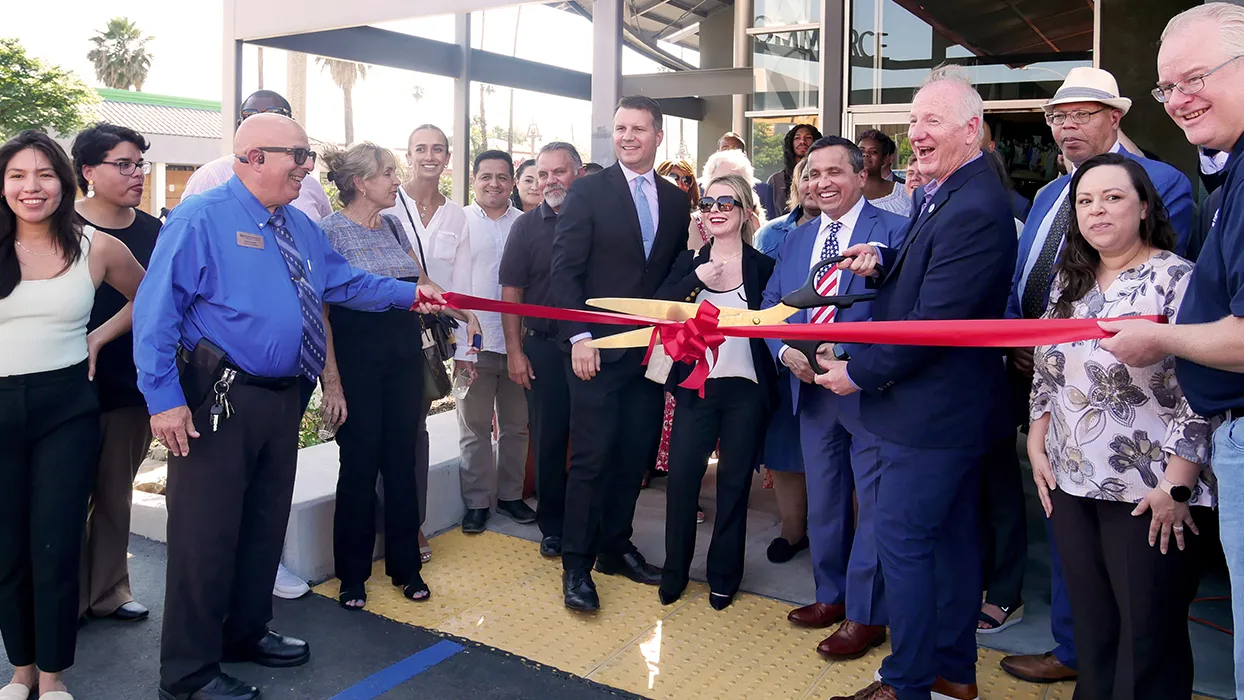
More than two decades of supporting entrepreneurs across the Inland Empire has led to a historic milestone for Cal State San Bernardino. The Randall W. Lewis Center for Entrepreneurship has surpassed $1 billion in economic impact, helping thousands of businesses grow, launch and create jobs throughout Riverside and San Bernardino counties.
The milestone, confirmed through year-end reporting for 2025, reflects the cumulative impact of the center’s work since the early 2000s, when its programs began expanding across the region. That impact includes entrepreneurs gaining access to startup and expansion capital, businesses increasing sales and profits, companies securing government contracts, and local firms expanding into international markets.
Since then, the center has assisted 213,552 businesses, helped launch 2,839 startups, and supported the creation or retention of 62,459 jobs. The total economic impact generated through those efforts now stands at $1.013 billion.
In 2025 alone, the center assisted 12,730 businesses, supported 278 startups, generated $188,173,654 in economic impact, and helped create or retain 8,437 jobs.
For Mike Stull, director of the Randall W. Lewis Center for Entrepreneurship and the Randall W. Lewis School of Entrepreneurship at CSUSB, the moment the milestone became clear was unexpected.
“My first response was surprise,” Stull said. “We thought, okay, wow, it's highly likely that by the end of 2026 we're going to hit the goal … and then our team just had a phenomenal fourth quarter in 2025.”
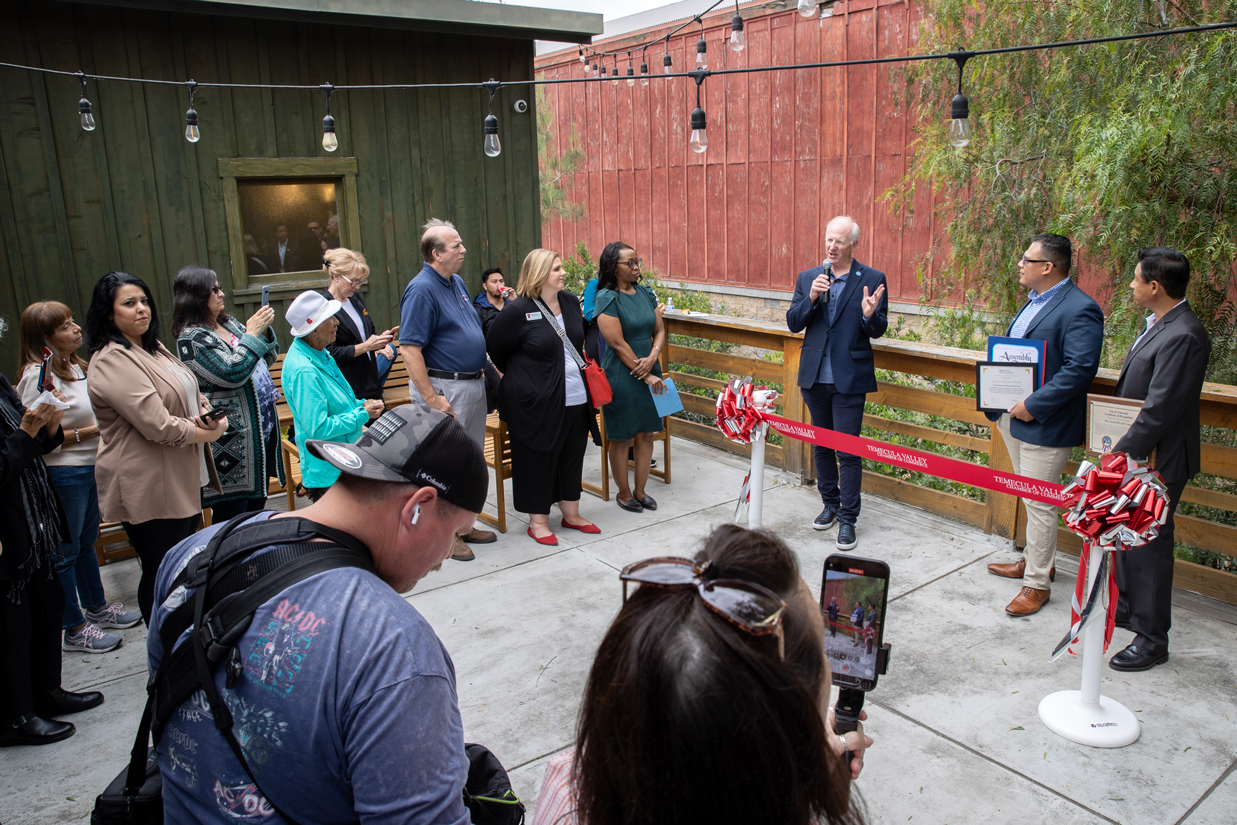
The achievement came earlier than anticipated as the center was preparing a campaign highlighting its progress toward the $1 billion goal. Instead, the team pivoted to celebrating the milestone.
The results reflect years of collaboration among consultants, partners and entrepreneurs throughout the region. “Oh, without a doubt, it's like anything — it's a recipe,” Stull said. “A good dish has multiple ingredients that elevate it to the next level.”
At the center of that effort is a team of consultants who work directly with entrepreneurs and small business owners throughout the Inland Empire.
“We've got an incredibly talented, dedicated, professional team of business consultants that deliver services every day, working with our clients in the community,” Stull said. “Helping them achieve milestones with their businesses — whether that's getting the business started, growing it to the next level, getting access to capital, getting access to government contracts, or exporting their product.”
Entrepreneurs who connect with the center often begin by working with consultants through programs such as the Inland Empire Small Business Development Center, the Coachella Valley and Inland Empire Women’s Business Centers, or the Entrepreneurial Resource Centers. Through one-on-one advising, workshops and training, entrepreneurs can receive guidance at no cost on topics such as financing, marketing, operations and business growth, while consultants connect them with additional resources when specialized services are needed.
For Brianna Sotelo, an aspiring entrepreneur exploring plans for a mobile retail business, that support began with a simple online inquiry. Within a day, she was connected with a consultant who helped guide her through the early stages of planning her venture.
“My experience at the Entrepreneurial Resource Center in San Bernardino was great,” Sotelo said. “Within 24 hours, I had someone from the center calling me to get more information about my business idea and what I wanted to focus on. The consultant really took the time to break down my industry-specific needs and provided me with questions that would assist me with writing my business plan. It was extremely helpful.”
Stories like Sotelo’s illustrate the center’s hands-on approach to supporting entrepreneurs. Powering that work is what Stull describes as the center’s “rocket fuel”: funding and partnership support from the university, federal, state, local and private sectors. That support has helped the center build the systems, staffing, programming and capacity that has enabled it to serve entrepreneurs at the volume and quality required to reach the $1 billion milestone early.
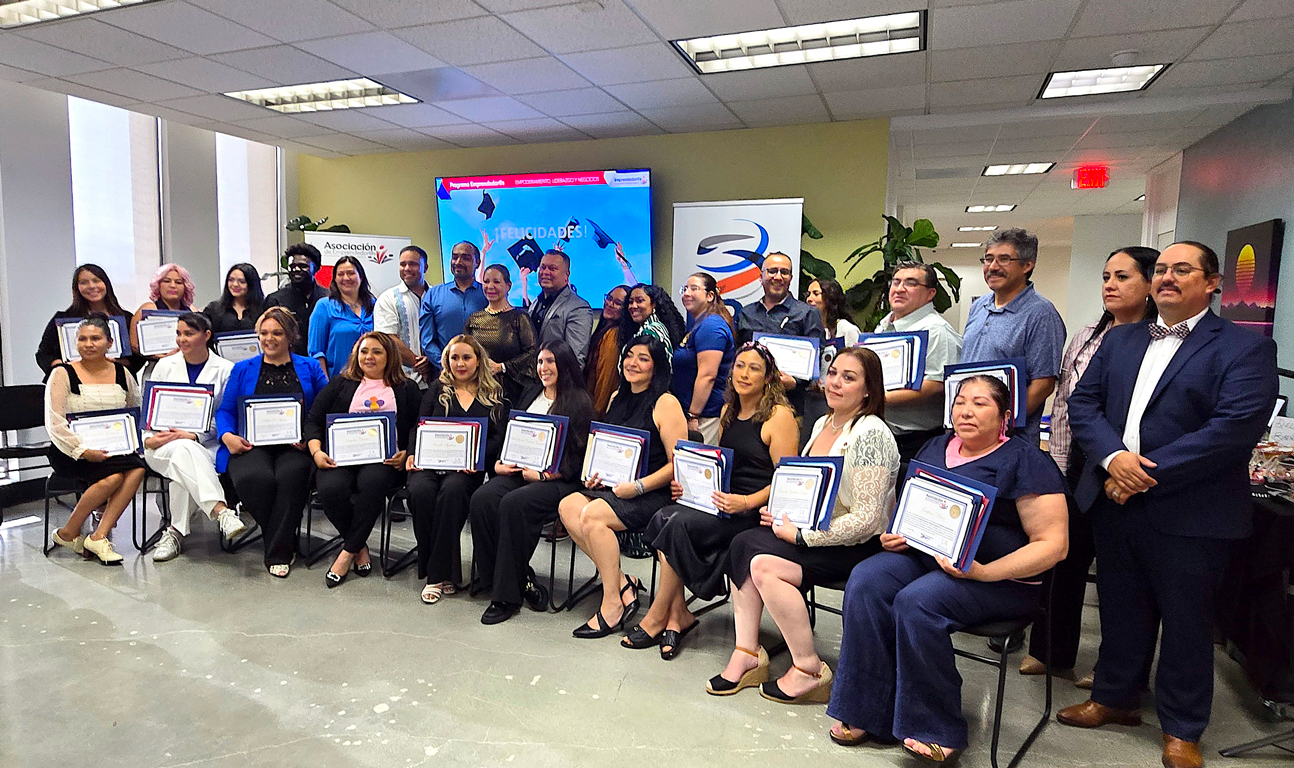
The one initiative that significantly expanded the center’s reach was the creation of Entrepreneurial Resource Centers (ERC) in San Bernardino, Palm Desert and Temecula. These hubs connect entrepreneurs with counseling, training and business development resources and have helped bring new attention to the center’s programs.
“I think the establishment of the Entrepreneurial Resource Center was really the one thing that raised our profile and extended our reach even more,” Stull said. “It created a lot of buzz and a lot of awareness… and drove a lot more people to seek out our services that maybe hadn't done so before.”
For entrepreneurs in the community, those services can be transformative.
Ariana Mendoza, a San Bernardino entrepreneur, stepped into the business world to continue her family’s legacy when her father became ill and could no longer manage the family business. Determined to move forward, she launched her own company specializing in door frames and hardware installation for both private and public sector projects.
After securing her first contract with the U.S. Department of Veterans Affairs in 2021, Mendoza realized that navigating government contracting required specialized knowledge. She turned to the Inland Empire Small Business Development Center, where she worked with consultant Jackie Guilfucci to better understand the complexities of public sector work.
Through the center’s guidance, Mendoza received training in labor compliance requirements, such as certified payroll, prevailing wage regulations and project labor agreements. She also gained support in identifying beneficial business certifications, navigating procurement systems and evaluating which contract opportunities aligned with her company’s growth goals.
With that mentorship, Mendoza developed the skills and confidence to pursue competitive government contracts while strengthening the long-term health of her business.
The work of the center also reflects CSUSB’s broader role as a driver of economic development in the region.
“When people think of Cal State San Bernardino, they think academic institution, and that's spot on,” Stull said. “But CSUSB is more than that.”
While entrepreneurship programs at many universities focus primarily on academic coursework, CSUSB has developed a model that integrates education with community engagement and economic development. Stull recalled an entrepreneurship colleague from another university telling him: “We're helping startups — you're actually doing economic development.”
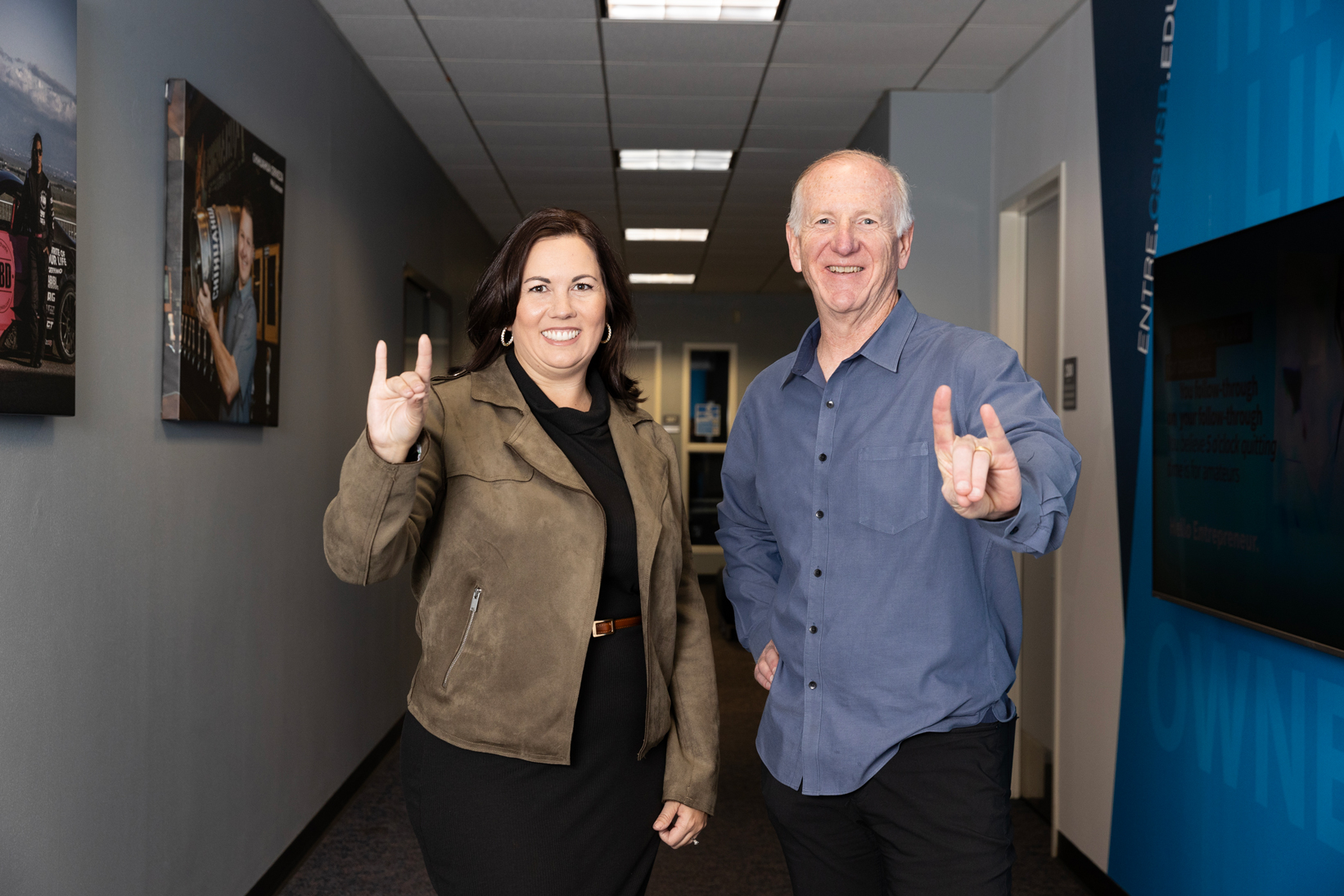
Within the Jack H. Brown College of Business and Public Administration, the Randall W. Lewis School of Entrepreneurship provides the academic programs that prepare students to launch ventures and innovate in their careers, while the Randall W. Lewis Center for Entrepreneurship connects those ideas to the real world through mentorship, training and business support programs.
Students often work directly with local companies through consulting projects, competitions and startup initiatives offered through the center.
“We have students who are working through our business consulting course … actually working on projects with businesses in the community,” Stull said. “They're designing marketing initiatives, building strategies — and the impacts can be really tangible.”
In some cases, those experiences lead directly to career opportunities. Stull recalled an interaction with one entrepreneur regarding a CSUSB student who had assisted him. “He said, ‘Would it be inappropriate for me to talk to the team leader? I'd like to offer her a job. I don't know if she'll take it, but I'd like her to lead this initiative,’” Stull said.
For Stull, the $1 billion milestone is both a moment to celebrate and a reminder that the center’s mission continues.
“This is certainly an important goal, but this is just a part of what we do,” he said. “How do we define the next generation of what we do and the impact we're going to have?”
And while the milestone reflects a remarkable economic achievement, Stull says the real impact is measured in the people and communities behind the numbers.
“It's a number, and numbers are important, right?” he said. “They give us a benchmark of what we want to shoot for, and it's part of how we're measured performance-wise.
“But what we have to be careful not to lose sight of is what’s behind the numbers – it's a story of people,” he continued. “It's a story of people realizing their dreams, of people growing their business, creating new jobs, retaining existing jobs. Communities being transformed by business ownership.”