Alan Llavore | Office of Marketing and Communications | (909) 537-5007 | allavore@csusb.edu
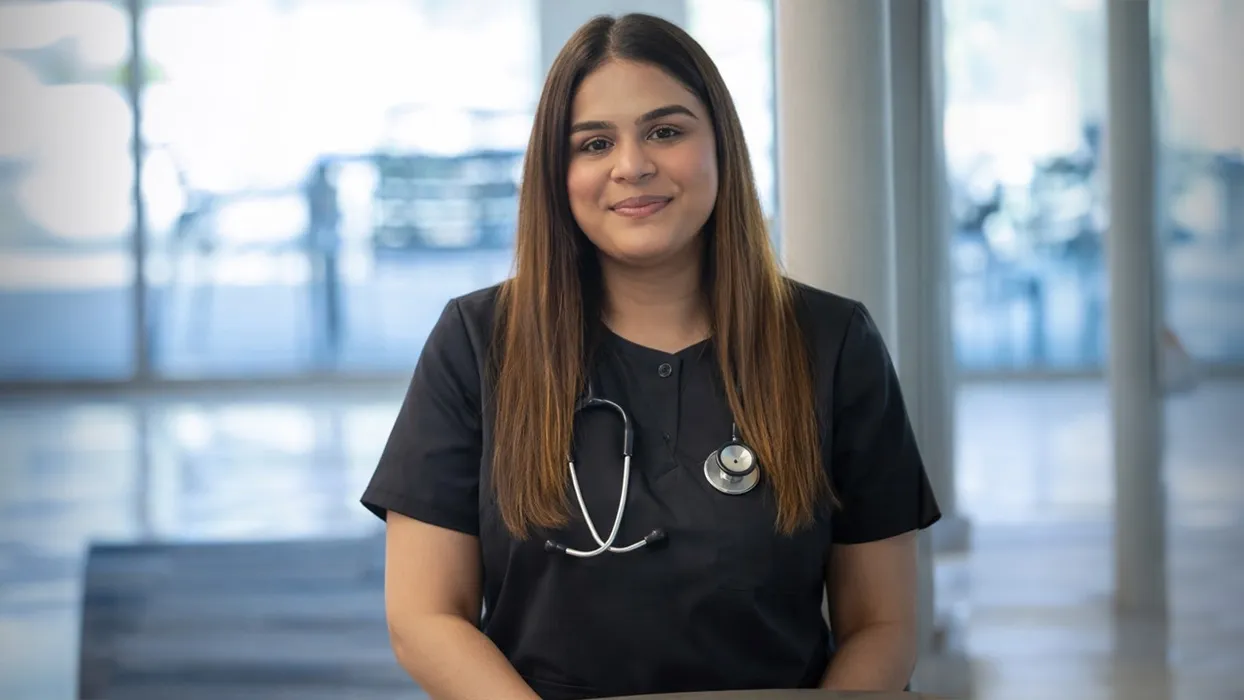
International student Priyanka Varma arrived in the U.S. from India in August 2023 to pursue her master of science in health services administration at Cal State San Bernardino. Now preparing to graduate in spring 2026, she describes her experience in the program as so meaningful that she personally reached out to College of Natural Sciences Dean Sastry Pantula to encourage other students to consider the same path.
Varma’s inspiration to study medicine began when she was in high school. Her father became ill and had to undergo bypass surgery. Spending time at his bedside sparked her desire to study nursing and better understand how healthcare information is communicated to patients and families. She earned her bachelor of science in nursing degree and became a registered nurse in the Indian state of Gujarat. She worked for one year in the emergency department of a cancer hospital, then moved into the intensive care unit and eventually became a head nurse.
That, however, was not enough for her. “I wanted to get more knowledge,” she said. She explored how to obtain a visa to continue her studies in the U.S. “It was difficult, but I told myself: ‘Let me try once. If I am admitted to a graduate program, that will help me to come and study here.’”
She applied to four universities and was admitted to three. After researching each option, she determined that CSUSB offered the strongest fit for her goals and made the decision to travel to California.
“An advantage of the M.S. in health services administration program is that it is hybrid — I do not have to physically go in every day,” she said. “Even so, I enjoy when I am on campus. Though it is big, there are a lot of activities. It is really unique. I enjoy gaming, and there are a lot of opportunities to play on campus.”
Varma listed some of her biggest personal takeaways from the program: “I have learned about leadership, management, communications and how to be a good listener. I have absorbed a lot of information about healthcare facilities.”
She has been especially impressed by her professors. “They are really good,” she said, noting that their approach to teaching feels markedly different from what she experienced in India. Professors here are friendly. I asked myself, ‘How can professors be this friendly?’ In India, they are very strict.”
That openness extends beyond the classroom. She said faculty are approachable and responsive, often making themselves available by phone or text when students have questions. She recalled a time when lecturer Chibunna Nwaobia bought pizza for the class.
“That was a really surprising experience for me,” she said. That accessibility, she explained, has helped build trust and strong relationships.
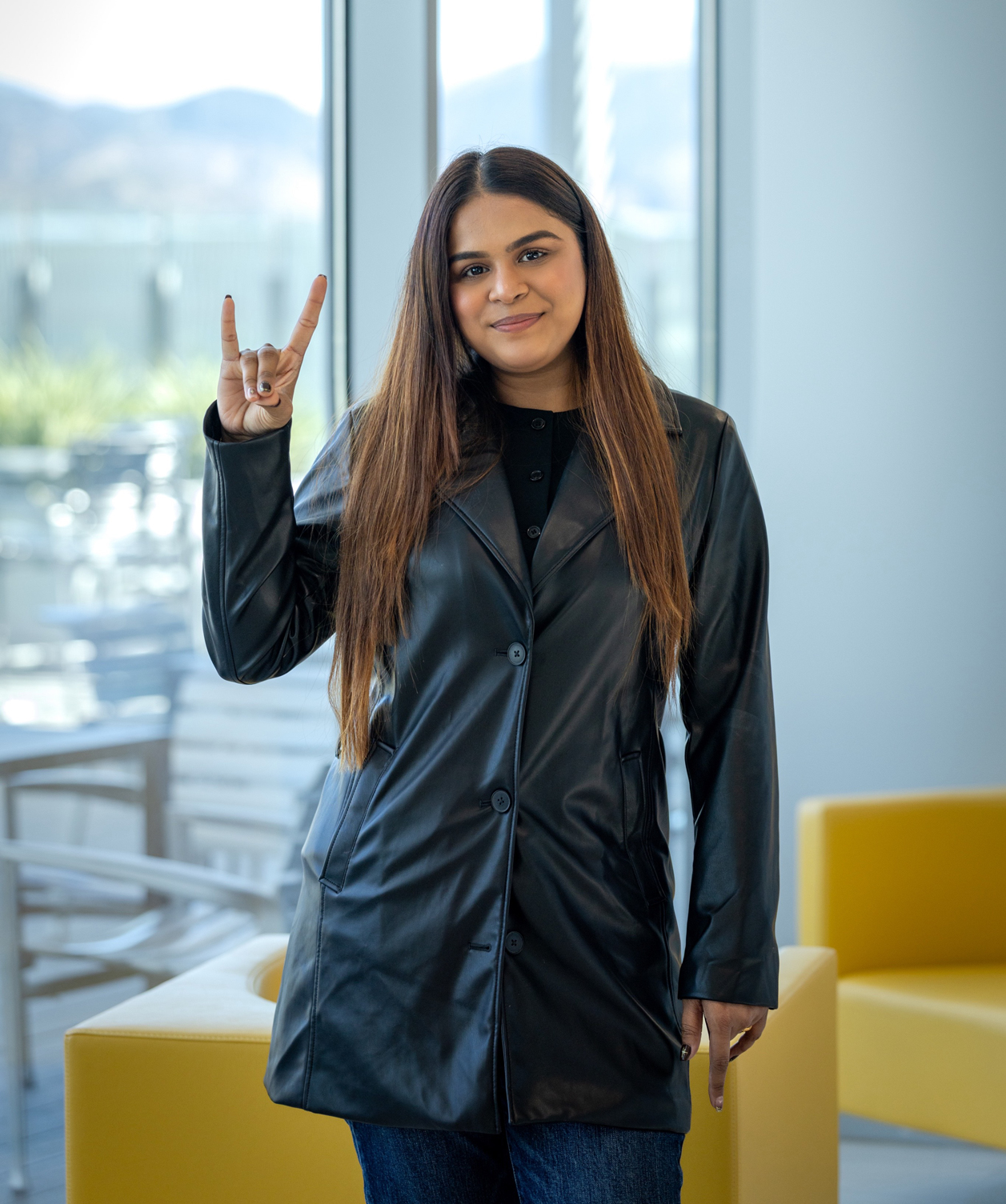
For Varma, learning has also taken place outside of the classroom. “I learned to be independent,” she said. “In India, I had family around me.” During her first year, she lived with her uncle and his family, who provided emotional support as she adjusted to life in a new country. Now living independently, she acknowledges that most of her journey has required her to rely on herself.
She noted that there are many international students in her program, most of whom have no family here at all.
“It is so difficult,” she said, speaking of the transition to living in a new country, far from home. She estimates that approximately 80% of students in her cohort are international. Those shared experiences have created strong connections, and she noted that several classmates have already graduated and begun working in hospitals and healthcare organizations.
She is grateful for the programs offered by the university’s International Education program. She recalled an annual “fashion show,” where “we had to wear our cultural clothes, and we had to walk. It was a really good event.” She also appreciates the basic needs support that CSUSB provides to students, including things like groceries. “I am lucky to be a Cal State student,” she said.
After the end of her first year, she began a volunteer program at Cedars-Sinai Medical Center and moved to Los Angeles. She is also gaining experience at PIH Health Good Samaritan Hospital in downtown LA. Through her volunteer roles, she gained hands-on insight into hospital operations in the United States. While her coursework provides theoretical knowledge, volunteering has allowed her to understand how policies, procedures and systems function in practice — and how they differ from her experience in India.
Varma is married and was able to have her husband join her for a time. Now, however, he is returning to India, and she will be on her own again. While she misses him a great deal when he is physically so many miles away, his support throughout her entire academic journey here in the U.S. has been constant. “My husband, his family and my family: their encouragement has meant so much to me. I get a call from them every day to check in and make sure I am doing well,” she said.
Her first impressions of the U.S. began with her arrival at Los Angeles International Airport. “I was really excited. I was looking at everything! I loved the calm, peaceful vibes at the beach. I have visited Santa Monica, Huntington and Newport,” she said. She found that she also liked the quietness in San Bernardino.
Her move to Los Angeles for her volunteer work introduced a different pace of life. “I live near the Hollywood Walk of Fame,” she said. “In movies, it looks like a good place to be. But, in reality, it can be scary to walk on the street. I see drugs, weapons and homeless people. I have also felt racism and had bad words used against me. This surprised me. But it is mainly from the street people.” Apart from those experiences, “other things are really good.”
Looking ahead, Varma plans to apply for internships and additional healthcare opportunities while completing her coursework. In the immediate future, she is also preparing for the NCLEX-RN so she can obtain her license as a registered nurse. As an international student, however, finding permanent work right now in the U.S. is challenging because of the sponsorship requirements.
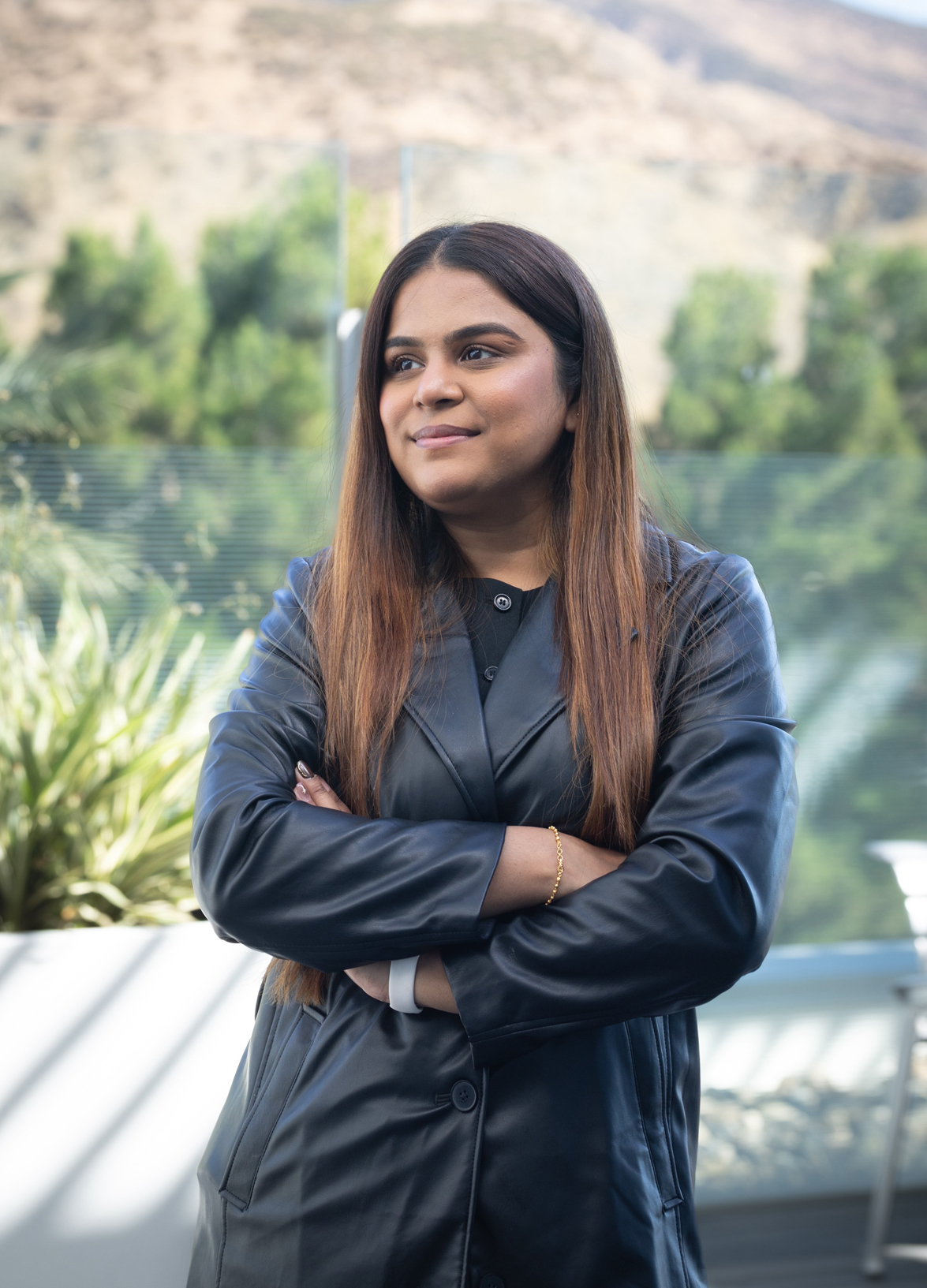
Varma is looking forward to graduating this spring. “I have been able to obtain a visa for my father to come and watch me graduate,” she said. “Right now, it is too difficult for me to go home and visit, so I am very grateful that he can come here, now that he has passed the visa interview process.”
Reflecting on her academic journey, she advises future students not to rely too heavily on artificial intelligence tools. “In India, I was studying and doing everything by myself. If you use your own mind, you will gain a better understanding of what you are studying,” she said.
She is also happy to offer advice to future international students.
“Never doubt yourself, and always take advantage of your opportunities!” She encourages them not to be discouraged. “Tell yourself, ‘You can do it; you can do it.’”
She also advised students who may feel overwhelmed by competing advice on how to acclimate to a new culture and country: “You have to make the decision. Stick to your own ethics.”
Varma remains hopeful. “It was really good to come,” she said. “I am working on my dreams.” She noted that it has not been a simple task managing academics, fitting into a new culture and being separated from her family. Nevertheless, “it has provided me with so much knowledge regarding independence, resiliency and personal development.”
Varma’s drive, enthusiasm and persistence are evident as she prepares for the next chapter of her professional journey. Proud of the path she has carved at CSUSB, she is eager to serve as an ambassador for the master of science in health services administration program and to encourage others to pursue their ambitions with the same determination.
Visit the master of science in health services administration website to learn more about the program.