Alan Llavore | Office of Marketing and Communications | (909) 537-5007 | allavore@csusb.edu
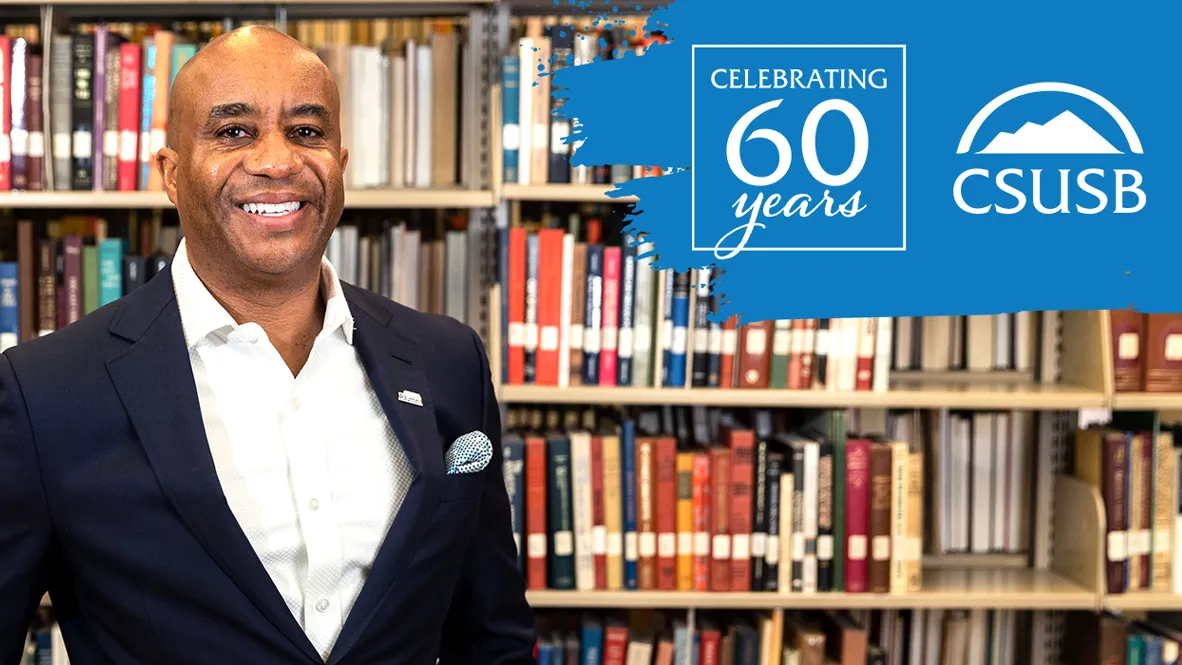

In the late 1980s, when it came time for alumnus Sedrick Spencer to choose a college, he narrowed his decision to UC Riverside and Cal State San Bernardino.
UC Riverside was familiar territory. “I went through all of UC Riverside’s summer programs so I was familiar with the campus and what they represented,” he said.
Cal State San Bernardino, however, offered something different.
“I hadn’t had a lot of experience at Cal State San Bernardino,” Spencer recalled, “so I decided to go to Cal State just because it was something new and fresh to me.”
At the time, CSUSB itself was new and fresh. Founded in 1965, the campus was barely more than 20 years old, and Spencer, a self-described “sponge,” arrived eager to learn. He earned his bachelor’s degree in 1991, followed by a master’s degree in public administration in 1996, beginning a lifelong connection to the university that has shaped both his career and his commitment to service.
Today, Spencer is a seasoned government relations executive with more than three decades of experience shaping public policy and legislative strategy across the public and private sectors. He currently serves as vice president of government relations at Paramount, following senior leadership roles in the biotechnology industry where he led state policy, advocacy and legislative efforts to advance business goals and patient access to therapies nationwide. He began his career in California state government and policy research, building a strong foundation in legislative and advocacy work.
Spencer also remains deeply engaged with his alma mater. He serves as the CSUSB Alumni Council representative and has been a member of the CSUSB Alumni Board since 2018.
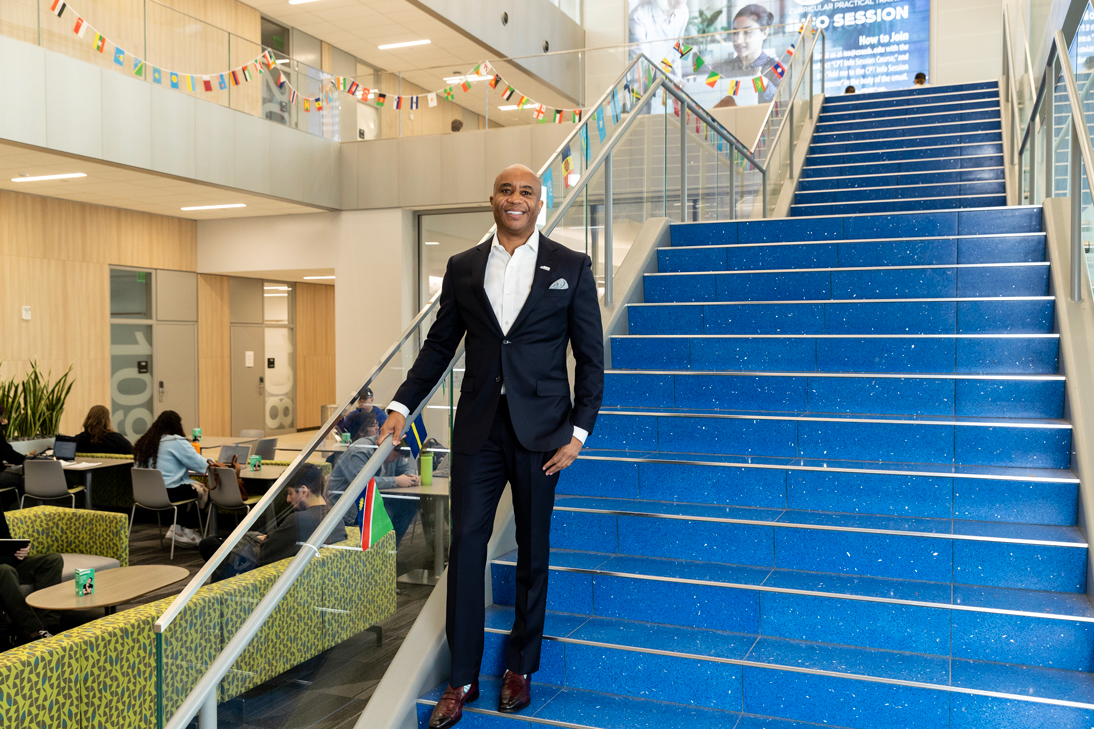
As CSUSB marks its 60th anniversary, Spencer reflects on the people and experiences that shaped his early impressions of the university. He credits Anita Black, then a university recruiter, as a major reason he chose San Bernardino, recalling that “she was just a good solid person and really cared about us as students making the best decisions in life.” He met with her several times a year, sometimes simply to talk things through or seek advice.
One of the most meaningful aspects of his experience, Spencer said, was the campus’ open-door culture.
“I think one of the beautiful things about Cal State then was that you could talk to administrators, faculty and staff about anything,” he said. That accessibility made him feel genuinely known and supported rather than “just a number.”
He also found a strong sense of community among his peers. “There was a good, solid community of students, specifically African American students, that supported one another,” he said. “We refused to let each other fail if we were honest and open about where our gaps were in our studies.” During that time, Spencer also became an active and lifelong member of Omega Psi Phi Fraternity Inc.
Another lasting influence was Sidney Ribeau, then dean of undergraduate students, who later went on to serve as president of Bowling Green State University and Howard University.
“Dr. Ribeau served as a mentor to me during my first two to three years at Cal State before his departure,” Spencer said. “I met with him weekly in his office.”
Ribeau reviewed Spencer’s writing and communication skills, advised him on navigating social issues on campus and encouraged him to engage constructively with administrators. Spencer also credits Ribeau with teaching him how to manage challenges proactively when his fraternity encountered difficulties.
“Dr. Ribeau emphasized accountability and the importance of proactively addressing concerns by working directly with campus administration,” he said.
That lesson has stayed with Spencer throughout his career. “In more than 20 years in corporate America, I’ve seen how often people try to pass the buck instead of taking responsibility,” he said. “I’ve always believed in owning my mistakes and keeping my word, and that’s become part of my reputation.”
Combined with the mentorship he received, Spencer said earning his degrees from CSUSB prepared him for navigating high-stakes professional environments. “It has allowed me to have a voice in the room,” he said. “It also prepared me to understand how to analyze problems and issues and how to problem-solve.”
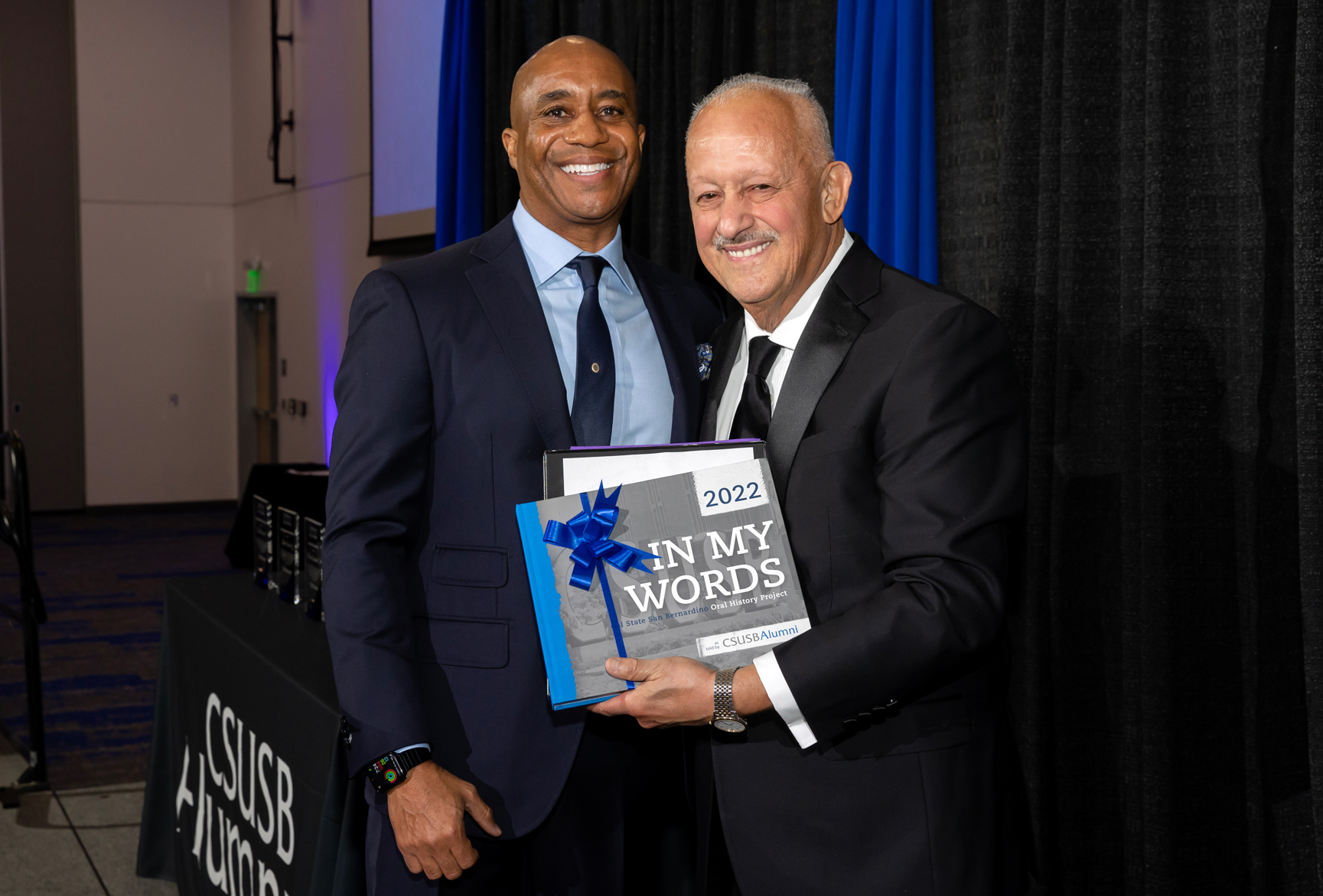
If he could share one lesson from his CSUSB experience with current students, Spencer said it would be this: “They deserve equal access to the room. Not being part of the UC system or USC does not diminish that right,” he said. “When you arrive, carry yourself with confidence and represent the Coyotes, knowing that others are following who deserve the same opportunity.”
When Spencer was a student in the early 1990s, CSUSB was anchored by foundational facilities such as the library, early classroom buildings and the original student union, with major expansions just beginning. Today, he takes pride in seeing the university’s dramatic growth, from roughly 25 core buildings to nearly 50, and the addition of more than 1.5 million square feet of academic, residential and student-centered space.
"I’m just so proud of what’s been put in place over the years for San Bernardino,” he said.
Only a small percentage of CSU alumni serve in statewide leadership roles, yet Spencer has consistently given his time and service to both the CSU system and CSUSB.
In 2022, he was appointed alumni council representative for the CSU Biennial Symposium Recognizing African American History and Achievement, serving a two-year term. In 2023, he was the only CSU alumnus appointed to the assessment committee charged with identifying and selecting the next CSU chancellor. He is also president-elect of the CSU Alumni Council.
Spencer said his commitment to service is rooted in lessons learned long before college. “I grew up in the church, and I always saw my mother give beyond what she had,” he said. “It’s become second nature to me to serve at all levels.”
His community service work reflects that philosophy. He served as regional director of Omega Psi Phi Fraternity Inc. from 2009 to 2012 and has been a member of its International Social Action Committee since 2018. He has chaired the NAACP Health Committee since 2016 and has served with Young Community Developers as a board member since 2014 and president since 2020.
Looking ahead, Spencer hopes future generations will see CSUSB alumni as deeply connected and invested in one another. He envisions a culture where alumni engagement leads naturally to mentorship, opportunity and lifelong relationships, and where students understand that being part of the CSUSB community does not end at graduation.
“I want people to feel that this is something they can’t miss being a part of,” he said. “That sense of connection is what creates opportunity, not just for one person, but for everyone who comes after.”