Alan Llavore | Office of Marketing and Communications | (909) 537-5007 | allavore@csusb.edu
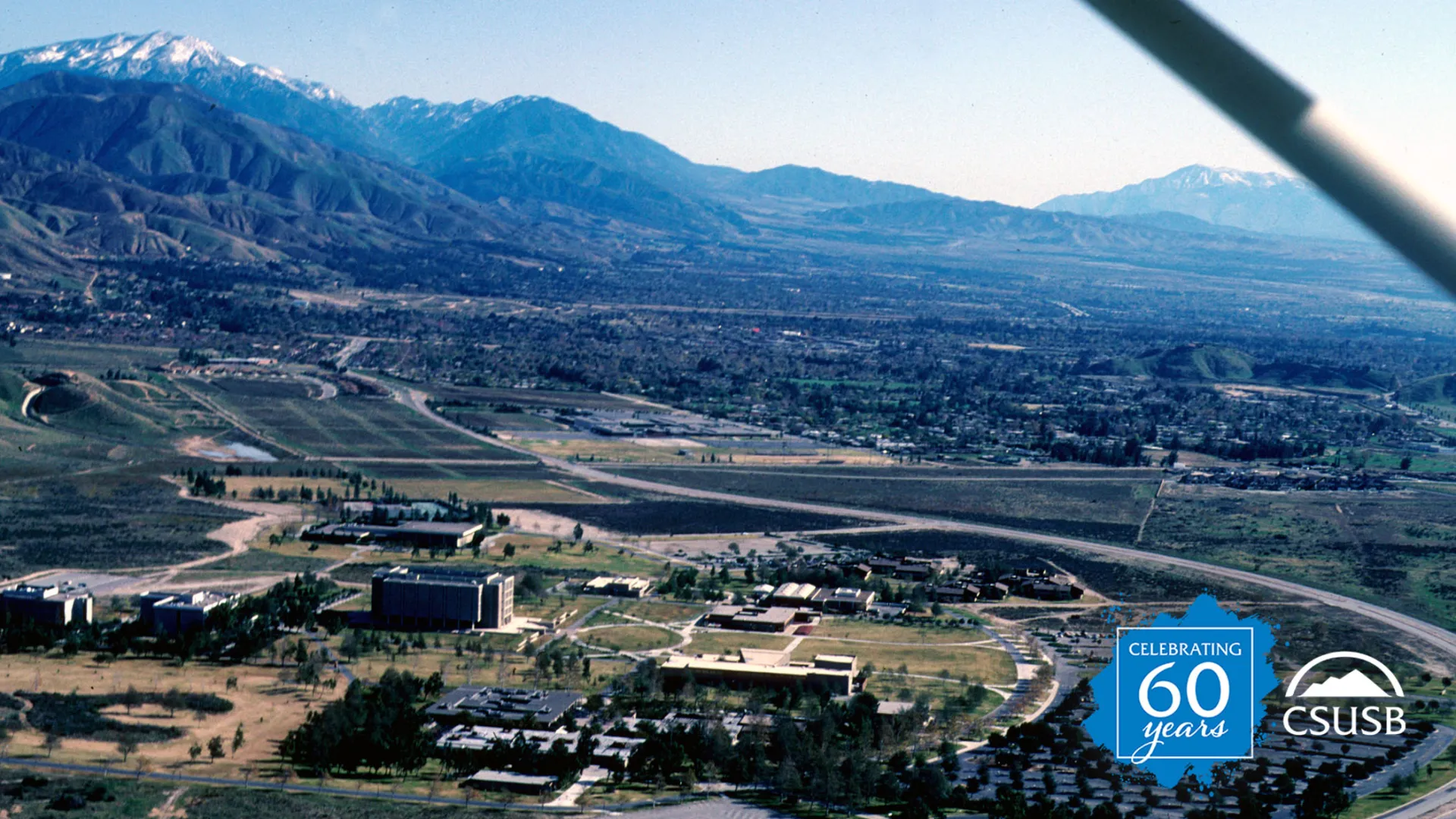
Academic year 2025-26 marks the 60th anniversary of the first classes held on the campus that would come to be known as California State University, San Bernardino. Those 60 years have seen tremendous changes, not only to the campus itself (which has expanded from San Bernardino to an additional, separate campus in Palm Desert) but also to the number of colleges, programs, degrees and students.
As the world outside the campus has changed, CSUSB has continued to pursue the heart of its mission: serving the people of the Inland Empire and growing the success of individuals, families and communities through access to an outstanding institution of higher education.
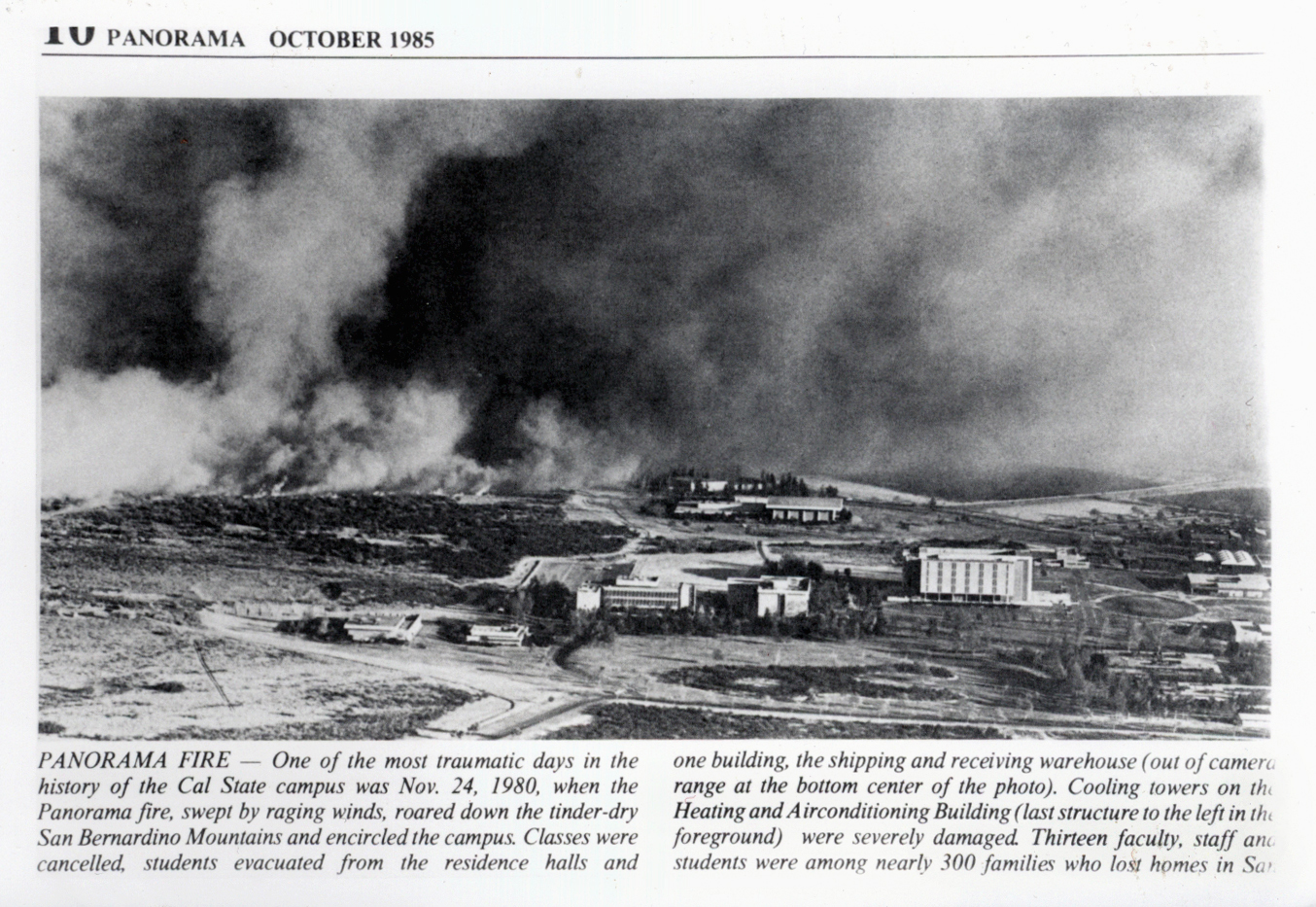
In 1980, the then-named California State College, San Bernardino celebrated its 15th anniversary by hosting its first open house in a major effort to draw community attention to the campus. The Children’s Center broke ground with the benefit of federal community development grants awarded to the city and county of San Bernardino. The Panorama Fire destroyed the Shipping and Receiving Warehouse on campus and severely damaged the cooling towers on the Heating and Air Conditioning building.
In 1981, Robert O’Brien in sociology became the recipient of the campus’ new Outstanding Professor Award and 950 students were eligible for degrees at the 15th commencement. The campus installed solar panels to heat the Serrano Village swimming pool.
Anthony H. Evans was appointed the second president of CSCSB in 1982, as it enrolled 5,600 students in 36 undergraduate majors and eight graduate degree programs. He assumed office in November. Library holdings numbered 340,000 volumes, and the campus housed 23 air-conditioned buildings. The CSU Board of Trustees named the John M. Pfau Library in honor of the retiring founding president.
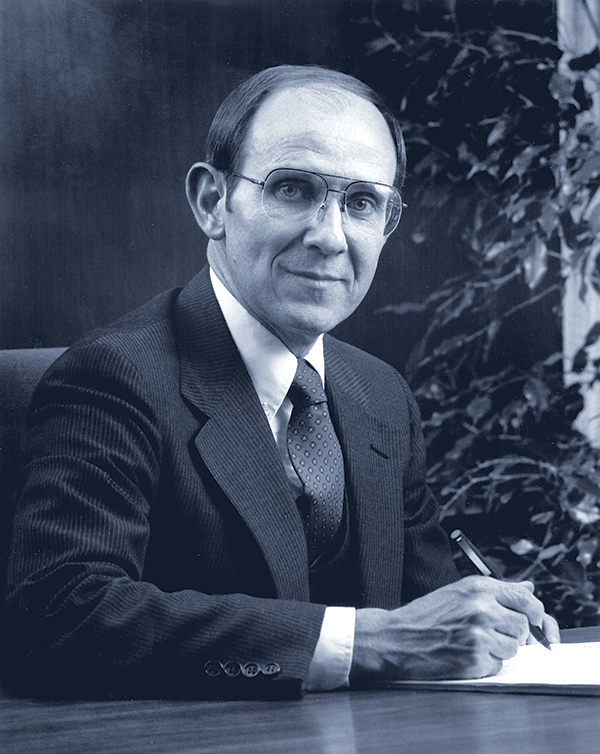
In 1983, President Evans was inaugurated as the college’s second president. One of his early actions was to appoint a 12-member taskforce to discuss adding intercollegiate athletics as a means of enhancing student development. Students signaled their support by voting 946-478 to double their instructionally related activities fee to $20 to fund a CSCSB intercollegiate athletics program.
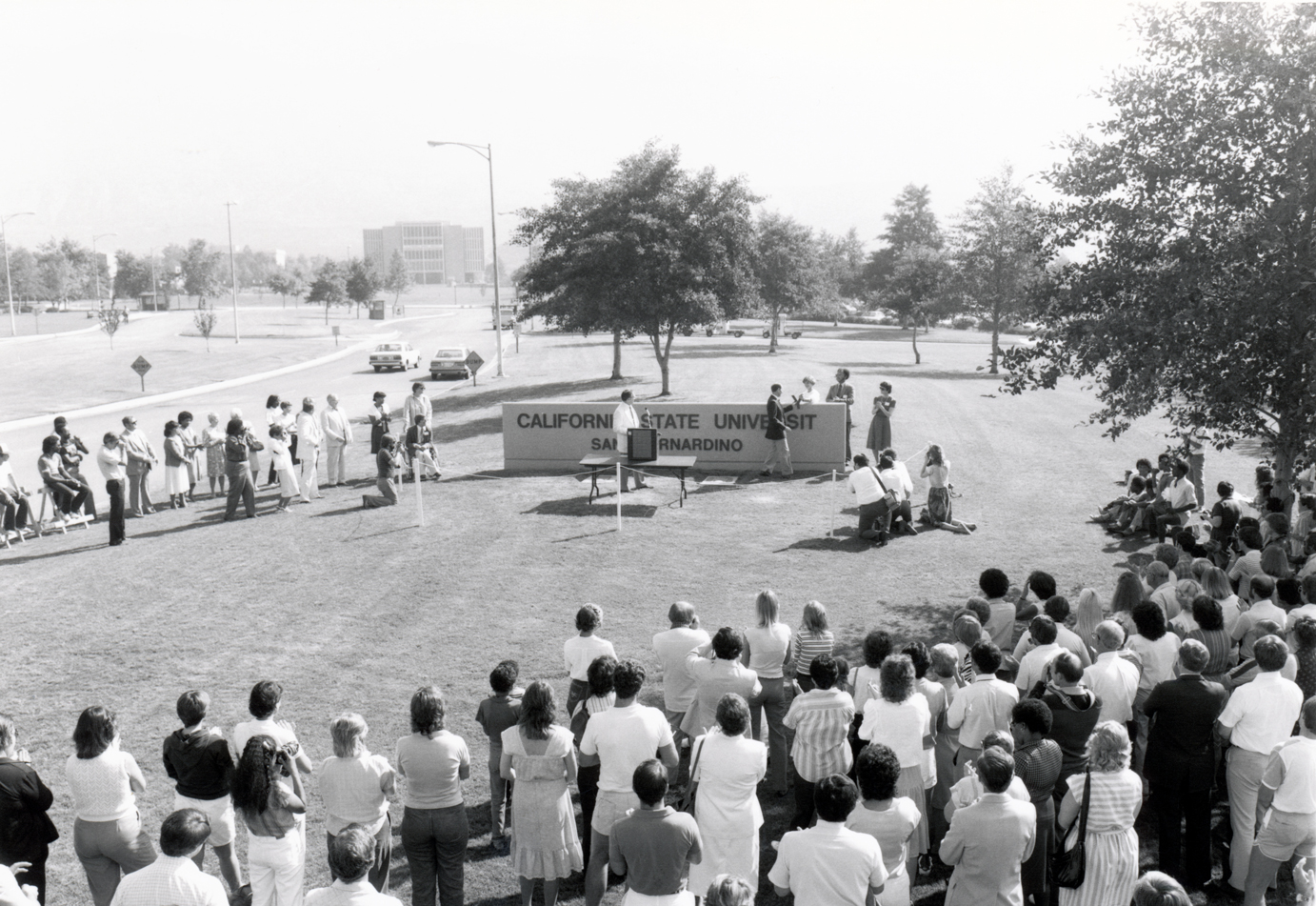
The year 1984 brought a transformative change as CSCSB officially became a university when the California Postsecondary Commission ratified the CSU Board of Trustees’ certification that the institution had met necessary requirements to be a university in the CSU system. Another campus milestone achieved was a 10-year accreditation by the Western Association of Schools and Colleges. Incoming freshmen and transfer students were now required by the CSU Board of Trustees to meet basic admissions requirements of college preparatory English (four years) and math (two years).
But 1984 was not done yet. The university’s intercollegiate athletics efforts continued to bear fruit as the National Collegiate Athletic Association (NCAA) accepted CSUSB as a member of Division III and authorized the school to compete in eight intercollegiate sports. The first NCAA-sponsored athletic contest involving CSUSB was a 4-3 men’s soccer victory over the University of Redlands. And the coyote became the official mascot.
Intercollegiate athletics continued their march forward in 1985, when Ruben Mendoza and Tim Stretch of the men’s tennis team qualified for the NCAA Division III National Championship tournament and made it to the quarterfinals in doubles. The volleyball team hosted its first tournament, which was co-sponsored by the Soroptimist Club of San Bernardino. Participants included CSUSB, Whittier, Claremont and Master colleges.
That year’s summer session had a record enrollment of 1,425 students in five sessions or attending special workshops in August. A fall 1985 enrollment of 6,519, an 11.5% gain over the previous fall, was the greatest increase in one quarter in the history of the university. A special convocation marked the 20th anniversary of the campus.
1985 also brought with it the establishment of the Advising Center. Five mobile units, located between the Student Services Building and the Child Care Center, opened to provide temporary faculty offices. The library received a 60-day free trial of InfoTrace, an automated reference database system, which had access to information from 1,000 periodicals (from 1982-1985) and two newspapers (past 60 days). A Faculty Computer Users Committee was established to determine the computer needs of faculty and to make recommendations for a five-year plan.
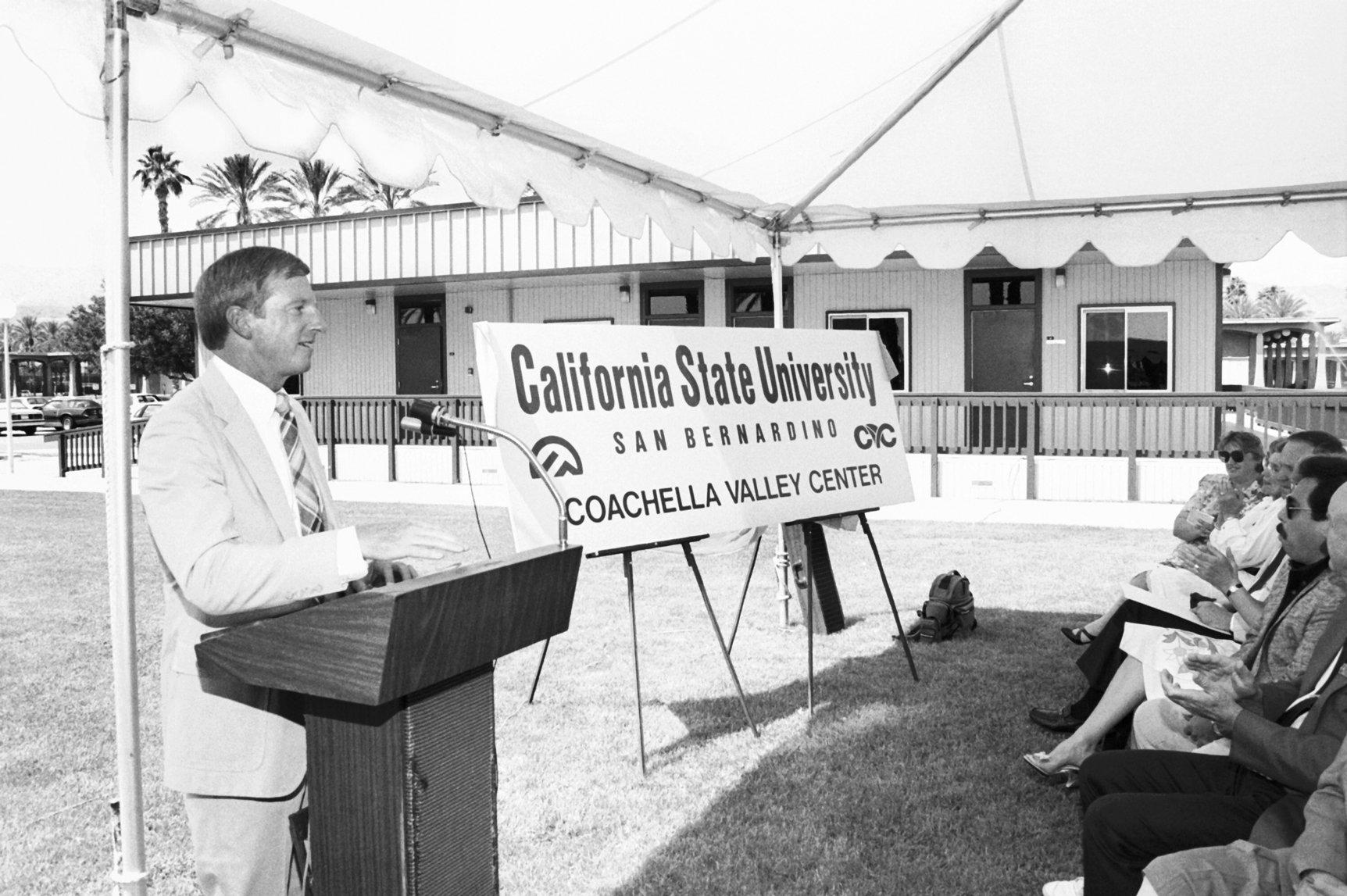
CSUSB established a formal presence in Riverside County in 1986 when the Coachella Valley Center satellite campus opened at the College of the Desert. The university offered junior, senior and graduate-level classes in 15 different programs. The first Homecoming Weekend was celebrated around Coyote basketball. A record 3,007 students signed up for classes in the university’s first computer-assisted registration. Six concerts comprised the university’s first Summer Entertainment Series.
Enrollment continued to grow: Spring 1986 enrollment was 6,338 students, a 13.8% increase over spring 1985; 7,444 students enrolled at CSUSB in fall, a 14% increase above the official student population for fall 1985. The 20th Commencement graduated 1,170 students. The 50th degree program, a bachelor of science in foods and nutrition, was offered. Construction began on the Faculty Office Building, designed to accommodate 81 faculty plus administrative offices for the schools of Education and Social and Behavioral Sciences. And the new campus radio station, KSSB, began broadcasting.
In 1987, census data recorded an enrollment of 8,376 students, an increase of 12.5% over fall 1986. The campus became that year’s leader in the CSU for enrollment growth. A groundbreaking was held for a 3,863 square-foot addition to the bookstore. The campus banned smoking in hallways and stairs. And 1,369 seniors and graduate students were part of the class of ’87. The Coachella Valley Center enrolled 403 students, representing an increase of 70% over the previous fall.
A dedication ceremony was held for the Coachella Valley Center in 1988; 51 class sections were offered through an instructional television hook-up with the San Bernardino campus. The university implemented its second joint Ph.D. program with Zagazig University in Egypt. And men’s golf finished in third place at the NCAA Division III national championship. Women’s volleyball advanced to the NCAA Division III West Regional title match. The CSU Board of Trustees announced that incoming freshmen and transfer students were now required to meet expanded admissions requirements: four years of college preparatory English, three years of college preparatory math, one year of a laboratory science, two years of a foreign language, one year of U.S. history/government, one year of visual/performing arts, and three years of electives.
The year 1989 brought the decade to a close. The university made a major change in its curriculum with a shift from 5 units course credits to four units course credits. The honors program was inaugurated to enhance diversity on campus. The library signed a contract with NOTIS Systems to be a beta test site for KEYNOTIS, an integrated online public access catalog. And men’s basketball became the first CSUSB team to host an NCAA tournament playoff game, losing in the Division III West Regional in the first round.