Alan Llavore | Office of Marketing and Communications | (909) 537-5007 | allavore@csusb.edu
Academic year 2025-26 marks the 60th anniversary of the first classes held on the campus that would come to be known as California State University, San Bernardino. Those 60 years have seen tremendous changes, not only to the campus itself (which has expanded from San Bernardino to an additional, separate campus in Palm Desert) but also to the number of colleges, programs, degrees and students. As the world outside the campus has changed, CSUSB has continued to pursue the heart of its mission: serving the people of the Inland Empire and growing the success of individuals, families and communities through access to an outstanding institution of higher education.
The year 2010 marked the first time in CSUSB history that the university declared a campus-wide enrollment impaction for Fall 2010 term. Reductions also included the cut of intercollegiate women’s tennis and $45,000 slashed from athletic scholarships. For the first time, the College of Extended Learning conducted Summer Session.
The Inland Empire Center for Entrepreneurship received the Entrepreneurship Education Award for “Outstanding Entrepreneurship Program” from the U.S. Association for Small Business and Entrepreneurship. The campus hosted its first Latino Education and Advocacy Days (LEAD) Summit. European CEO Magazine ranked CSUSB’s M.B.A. program as one of the 18 most innovative in the world.
The Student Health Center annex opened. Construction began on the Nursing Skills Lab Addition. The California Public Utilities Commission approved the installation by Southern California Edison Co. of a megawatt FuelCell Energy system on campus. Facilities Services began installing two wind turbines generating five kilowatts each of electricity.
In 2011, the university’s third president, Albert K. Karnig, announced that 2011-12 would be his final year at CSUSB, and Antreen Pfau, the wife of CSUSB’s first president, passed away. CSUSB’s first-to-second year student retention rates reached record levels, as nearly 90 percent of all CSUSB first-time freshmen returned to the university. The university continued with a robust calendar of theater, music and arts programming. Women’s volleyball star Samantha Middleborn sealed her place as one of the greatest NCAA Division II athletes of all time with her second consecutive Division II national Player of the Year honor. And a new CSUSB Athletics “Coyote” logo unveiled.
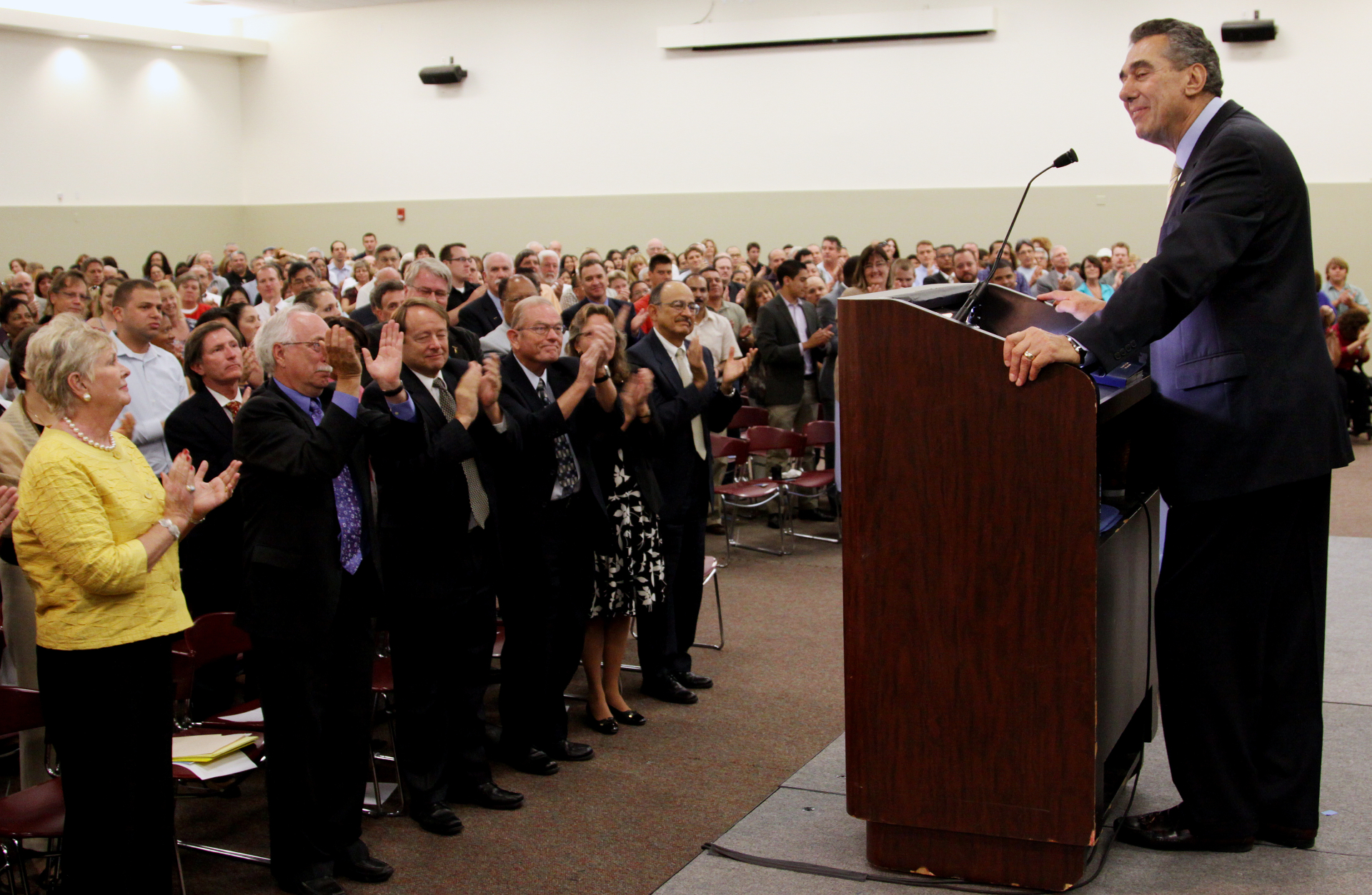
The year 2012 saw the death of the university’s first president, John M. Pfau, the departure of President Karnig, and the arrival of the university’s fourth president, Tomás D. Morales. Morales’ first essay in the CSUSB Magazine laid out his number one goal for his presidency: creating a culture of student success.
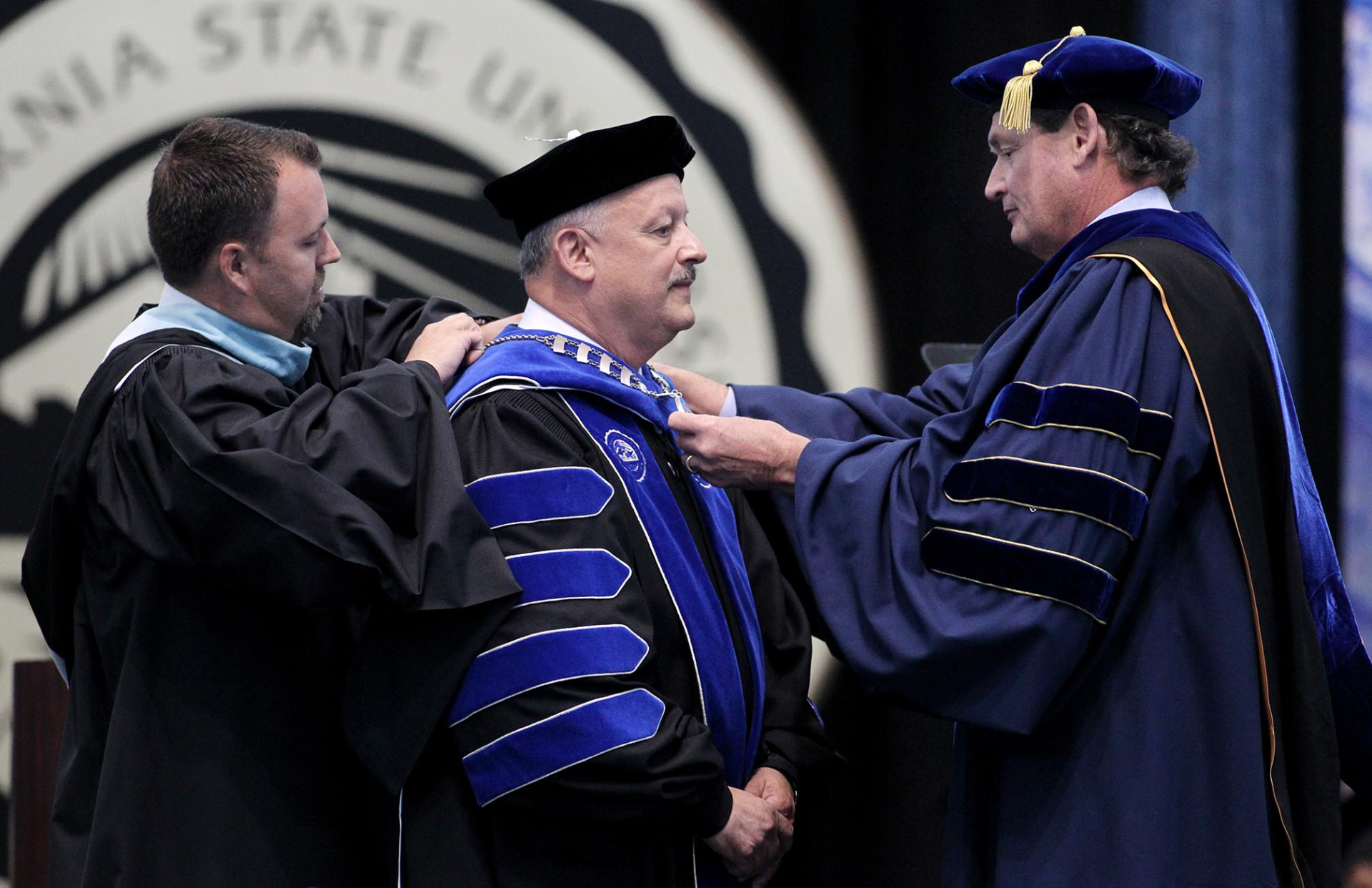
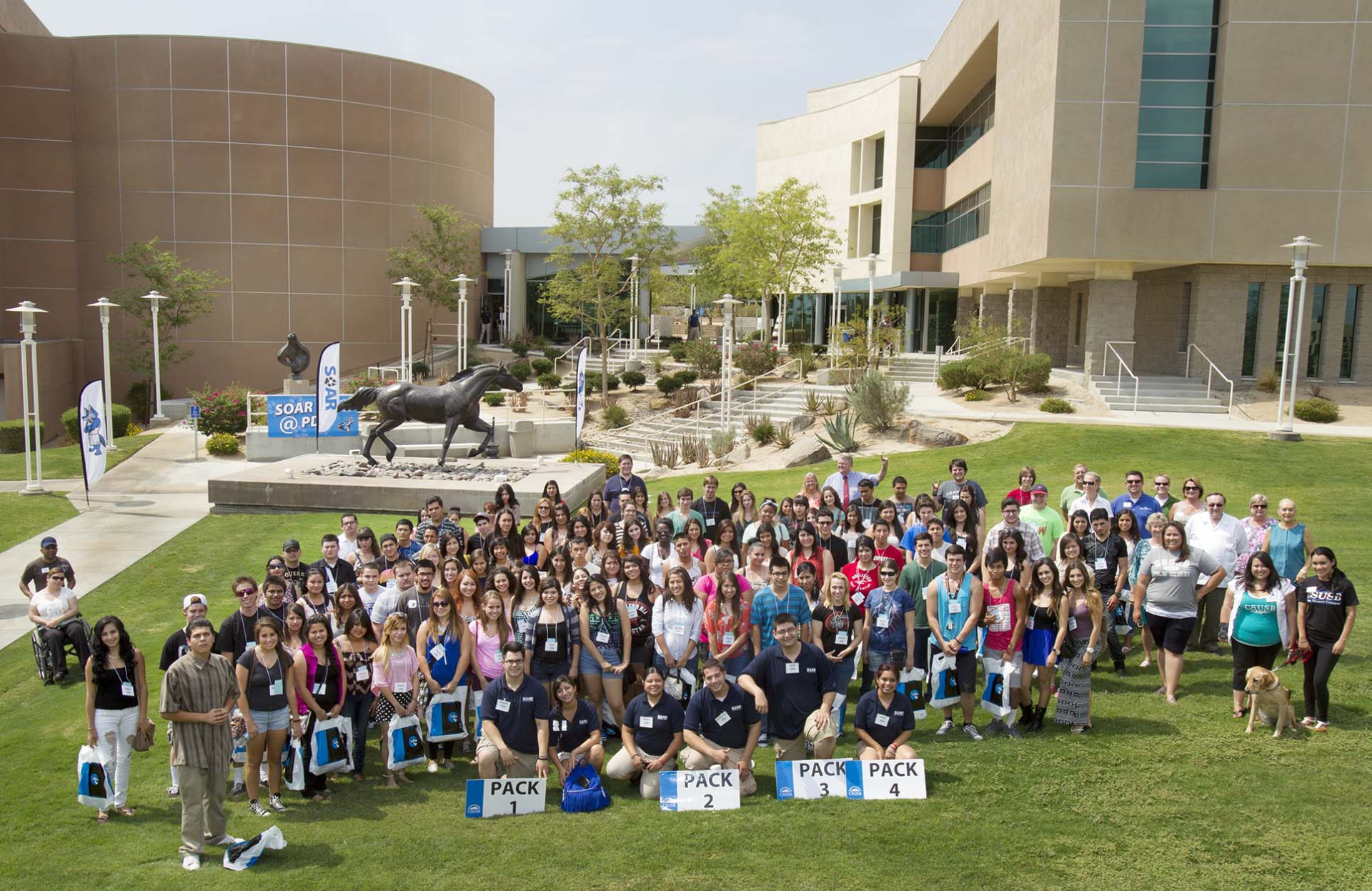
CSUSB was ranked No. 1 in California as a military friendly public university by Military Advanced Education magazine in 2013. Coyote Cares Day launched as a day of volunteer service within the city of San Bernardino. Spring saw the investiture of Tomás D. Morales as the fourth president. In the fall of 2013, the Palm Desert Campus welcomed its first freshman class. The new 1.4-megawatt utility-owned fuel cell began full operation. Integrated into the San Bernardino Campus’s central plant, the fuel cell generated electricity to the utility grid with waste heat to the campus at no cost to the university.
CSUSB joined TheDream.US in 2014, a national program with the goal of providing college scholarships to more than 2,000 undocumented students around the country. CSUSB also signed a historic agreement guaranteeing admission to the Palm Desert Campus for qualifying high school students from three Coachella Valley school districts. CSUSB already had similar agreements in place with San Bernardino City Unified, Chaffey Joint Unified, Colton Joint Unified, Rialto Unified and the Fontana Unified school districts.
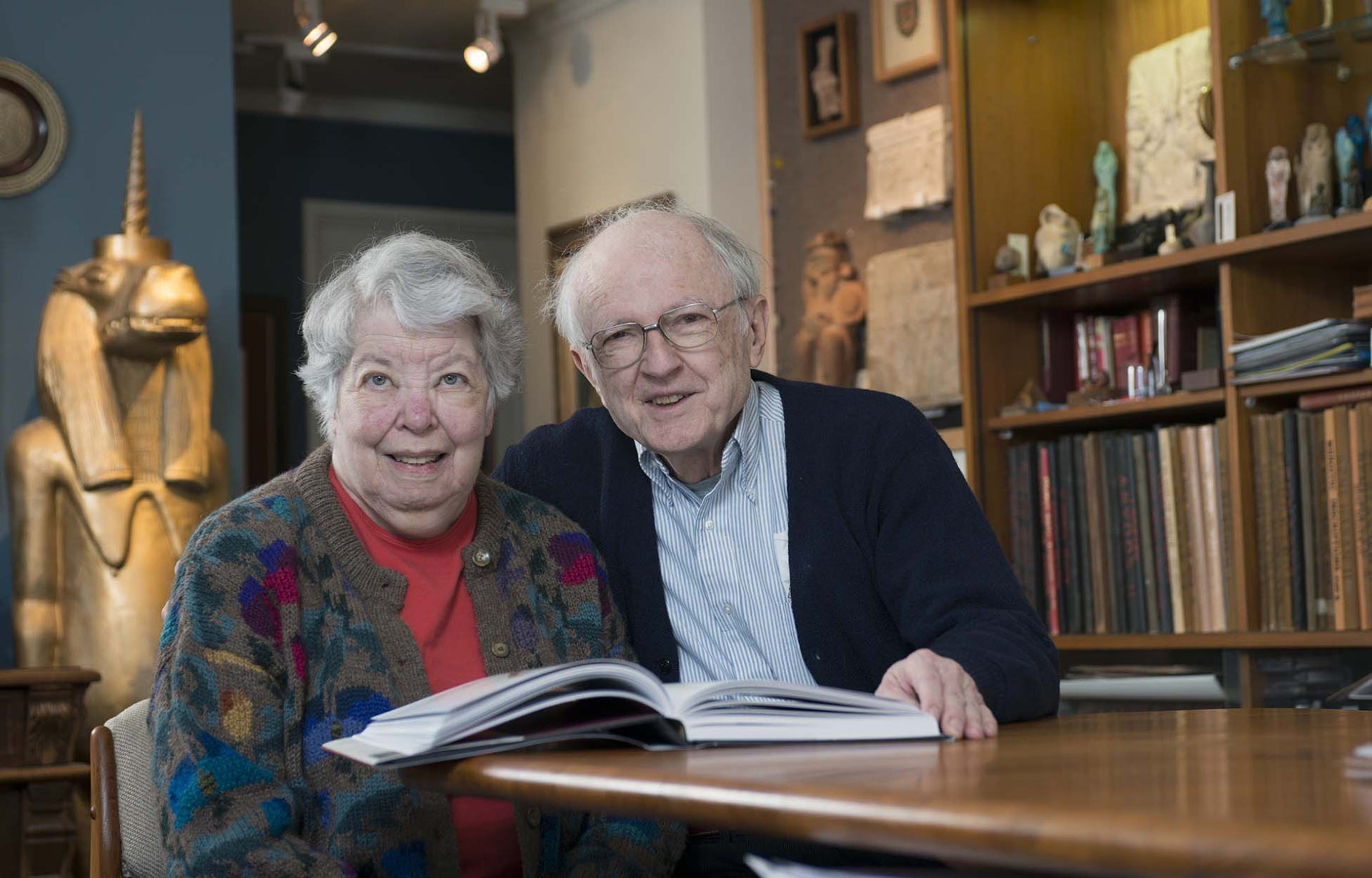
The Dr. Prem Reddy Nursing Laboratory held its formal opening. CSUSB Coyote Radio students snagged top honors at the National Golden Mic Awards in New York City for the student-produced syndicated radio program, “My Awesome Empire.” The Harer Family pledged $500,000 to establish the university’s first-ever, fully endowed faculty fellowship, creating a new tenure-track faculty position focused on Egyptology.
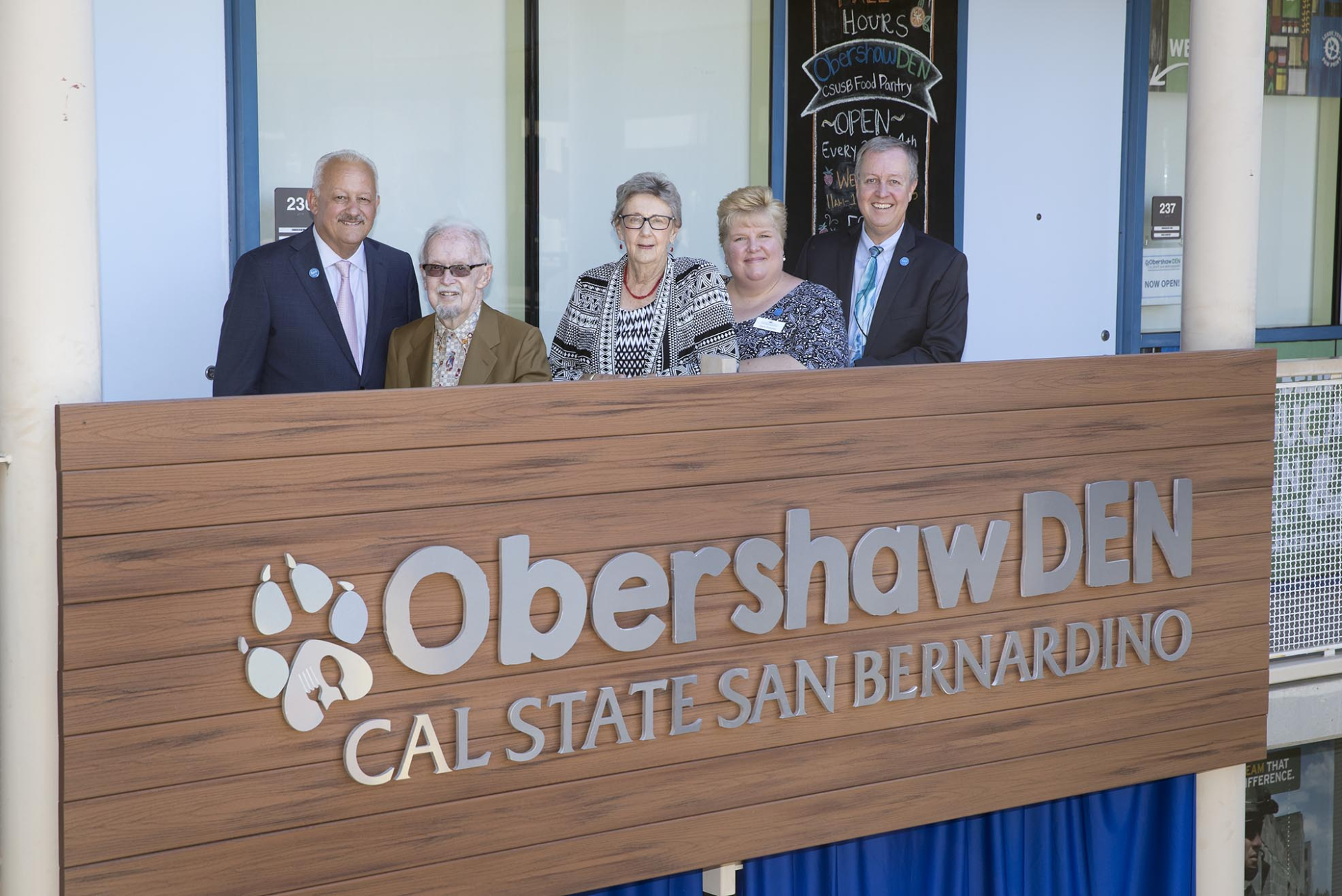
The year 2015 was transformational at CSUSB. For the first time, the June 2015 commencement was held off campus at Citizen’s Business Bank Arena (now Toyota Arena) in Ontario. CSUSB introduced the award-winning Coyote First STEP (Student Transition Enhancement Program), a free initiative to increase college readiness and graduation rates for incoming first-year students; launched the Obershaw DEN, a food pantry to help CSUSB students who face food insecurity; and established the DREAMers Resource and Success Center (now the Undocumented Student Success Center). The main campus in San Bernardino dedicated the Legacy Fountain, which included statues depicting the first three presidents: John M. Pfau, Anthony H. Evans and Albert K. Karnig. And 2015-16 was the 50th anniversary year of the first classes on the San Bernardino campus.
A bi-county consortium, led by CSUSB, was granted the top $5 million Governor’s Innovation Award in 2015. Other members included the University of California, Riverside, the K-12 school systems in San Bernardino and Riverside counties, local governments and the business community. This led to the creation of the 501-c-3 organization, Growing Inland Achievement, with its goal to create a coordinated cradle-to-career pathway, linking education and business throughout the two counties for the first time ever.
That December, however, marked a tragedy which is now remembered annually on Dec. 2. At 11 a.m. on Dec. 2, 2015, the Inland Regional Center, a San Bernardino facility that serves clients with a disability, was attacked by two terrorists who killed 14 and wounded 22. Five CSUSB alumni were among those who died: Shannon Johnson, B.S. environmental health science, 2004; Juan Espinoza, B.S. biology, 2002; Michael Wetzel, B.S. biology, 2001; Yvette Velasco, B.S. environmental health science, 2013; and Robert Adams, B.S. public health education, 2011.
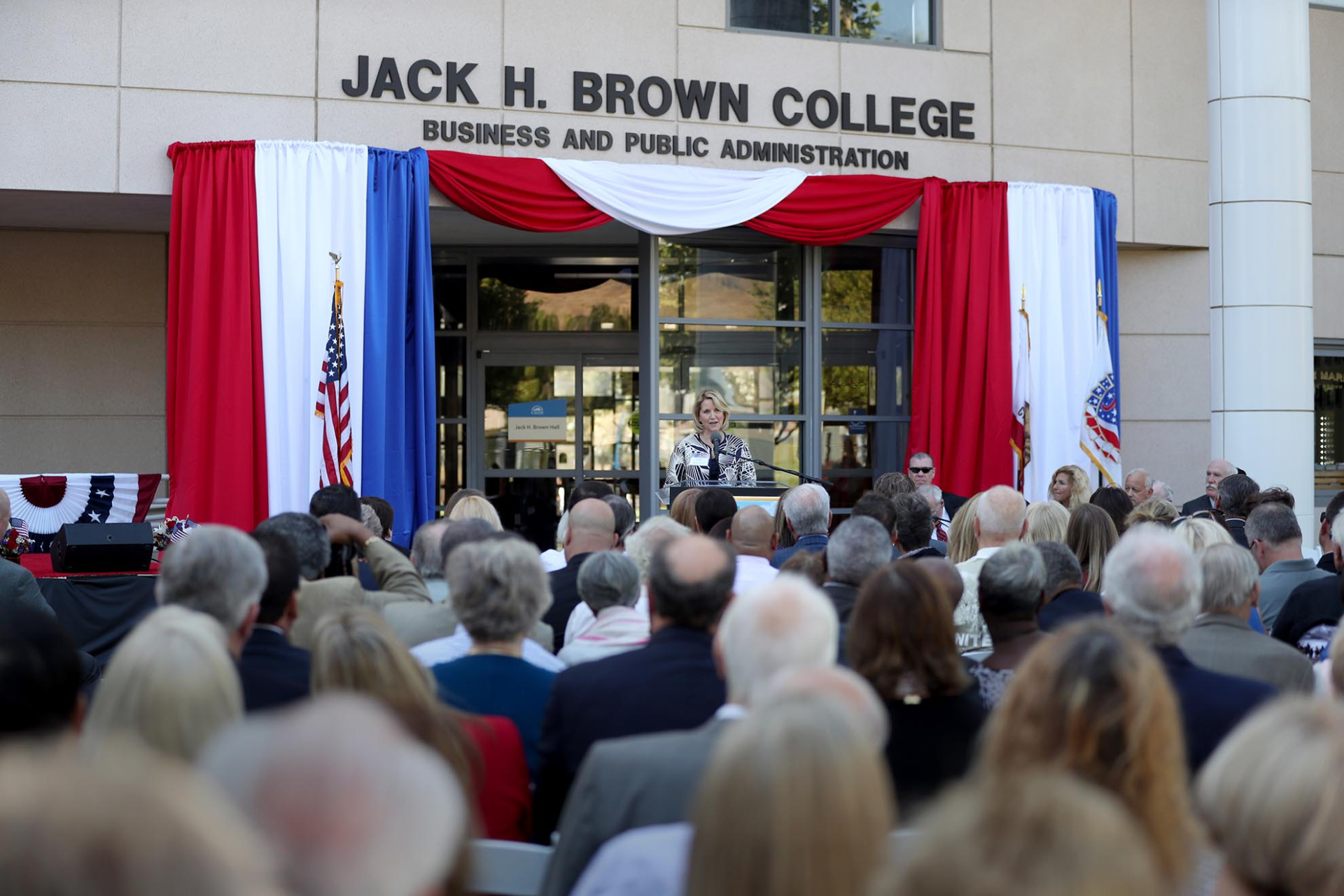
President Morales launched the public phase of the $50 million Comprehensive Campaign for CSUSB in 2016. By the campaign’s conclusion in 2019, it had raised a total of $54 million. Nationally acclaimed business leader Jack H. Brown made a $10 million gift to the College of Business and Public Administration and the CSU Board of Trustees approved renaming the college the Jack H. Brown College of Business and Public Administration. The gift was the largest cash gift to date received by the university.
CSUSB established the Pan-African Student Success Center. The university became one of eight CSU campuses to partner on a statewide effort, Project Rebound, to expand college access to formerly incarcerated individuals to help reduce the rate of recidivism, and established programs modeled after San Francisco State University’s Project Rebound. CSUSB officially broke ground on a new student housing and dining facility. It was the largest single capital project in university history to date, costing $95.8 million and encompassing 164,000 square feet. And the university marked the one-year anniversary of the Inland Regional Center shootings with a five-sided peace garden memorial next to the CSUSB Chemical Sciences Building.
The year 2017 saw the unexpected passing of CSUSB’s third president, Albert K. Karnig. The university established the First Peoples Center and the Neurofeedback Center officially opened at the Palm Desert Campus. The Faculty Center for Excellence opened, as did the Staff Development Center along with the “Cave,” Cal State San Bernardino’s 24-hour, seven-day-a-week student study center. A re-branding campaign was launched, per the CSUSB 2015-20 Strategic Plan, resulting in the new tag line: “We Define the Future.” CSUSB celebrated the inaugural class of Golden Grads, those from the first graduating class in 1967.
For the first time in the CSU’s history, in 2018, a majority of the campus presidents were female. CSUSB surpassed 100,000 graduates at its June Commencements. The university opened its new student housing (Coyote Village) and dining complex (Coyote Commons). In partnership with Growing Inland Achievement, the CSUSB Philanthropic Foundation secured two 24-month grants, totaling $1.1 million. For the third time, hundreds of young men from local high schools returned to CSUSB for the annual Black and Brown Conference.
President Morales served as one of three hosts at the semi-annual meeting of the International Association of University Presidents, an association of university chief executives from higher education institutions around the world, held in Guadalajara, Jalisco, Mexico. Theatre arts professor Kathryn Ervin was one of only 10 people inducted into the College of Fellows of the American Theatre, one of the highest honors bestowed on educators and professionals in the educational and theatre community. The re-launched Women’s Leadership Conference brought inspirational keynote speakers, engaging breakout sessions and a panel of successful women to the CSUSB campus for a day of thought-provoking conversation and empowerment. And the Office of Student Engagement hosted the Social Justice Summit, focusing on human rights and equality.
The 2018-2023 Resilient CSUSB Sustainability Plan was launched as part of a commitment by President Morales to deal with climate change. Cal State San Bernardino joined the Complete College Inland Empire, the 45th member of the Complete College America Alliance, focused on boosting completion rates and closing achievement gaps for students in the region’s public universities and community colleges. Political science major and honors student Ciera Hammond was named a winner of the Portz Interdisciplinary Fellowship Award through the National Collegiate Honors Council for her research on youth voter turnout. The Palm Desert Campus received $100,000 to support a new hospitality program.
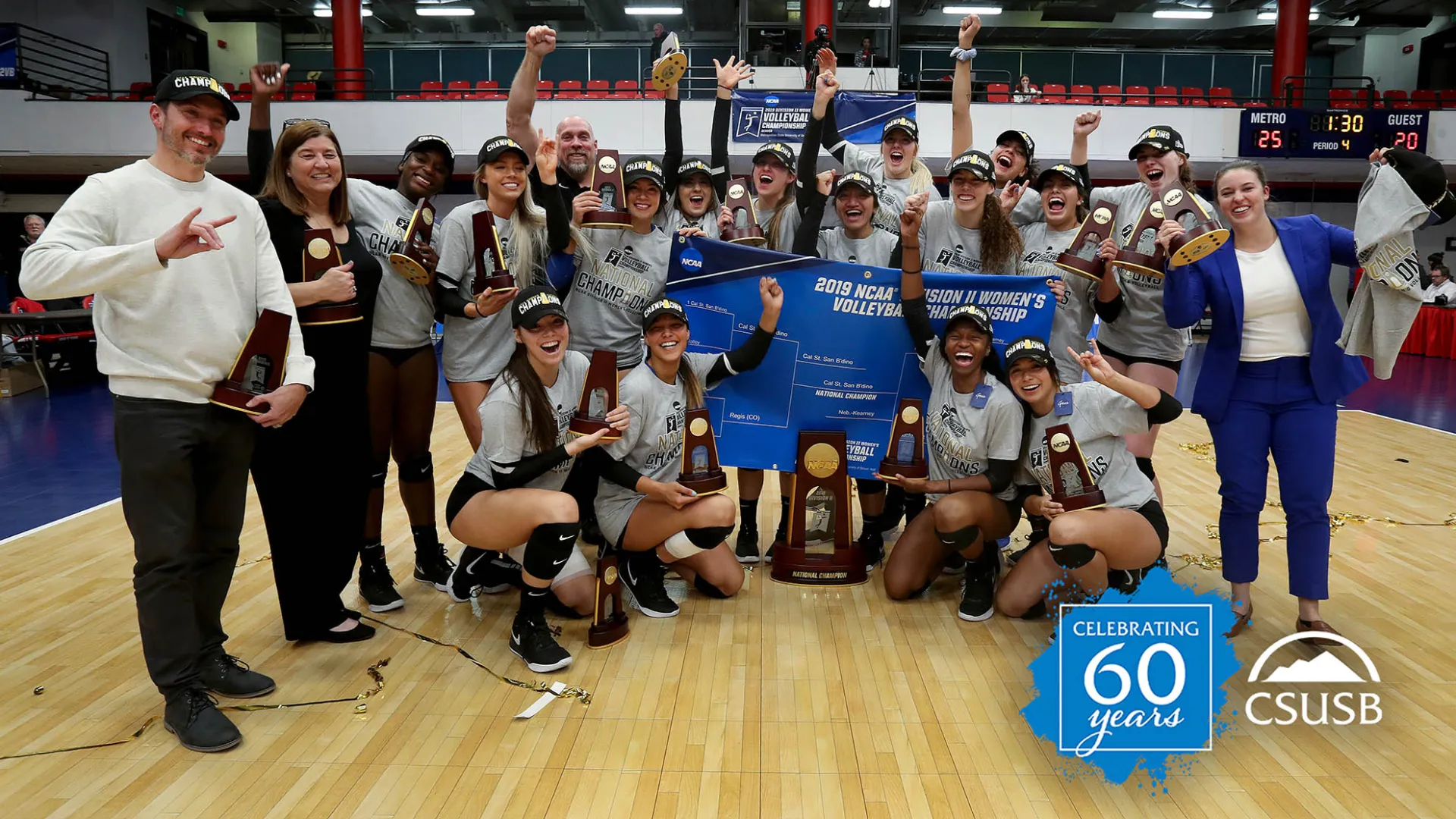
CSUSB celebrated the grand opening of the Center for Global Innovation in 2019, a $55 million, three-story, 71,000 square-foot building and the new home to the university’s College of Extended & Global Education. The Palm Desert Campus opened that campus’ DEN Food Pantry. And the women’s volleyball team captured the NCAA Division II National Championship, the university’s first national team title. Nursing education agreements among Cal State San Bernardino, Cal State Fullerton and Riverside City College were signed to increase the diversity of students in those institutions’ nursing programs and grow the number of nursing graduates entering the workforce.
Cal State San Bernardino prepared to launch a cybersecurity program at the PDC as part of a $749,000 National Science Foundation grant to increase the level of diversity among students enrolled in cybersecurity programs and allow more members of underrepresented communities to engage in the field.